Network Morocco
Qualitative market research agency in Morocco
MindMarket is a market research agency that runs qualitative studies in Morocco, from in-depth interviews and focus groups to shop-alongs and home visits, with moderators who live in the country and one project manager for your whole study. Morocco has 38.5 million people with a median age of 29.8; 66.3 per cent live in urban areas and 92.2 per cent are online (DataReportal, Digital 2026). People there move between Darija, French and Amazigh in a single day, and the language a participant chooses says something about the subject. Research works when the participant picks the language, and when the study leaves Casablanca.
AT A GLANCE
Morocco at a glance for researchers
- Population. 38.5 million people, median age 29.8, 66.3 per cent in urban areas (DataReportal, Digital 2026). A young country where a third of the population still lives outside the cities. Casablanca is the largest city and the economic capital; Rabat, the political capital, is an hour to the north.
- Languages. Darija, the Moroccan Arabic of everyday life, for most consumer sessions; French with many professionals and for business subjects; Amazigh in the regions where it is spoken at home. Our moderators live in Morocco and work across them. Standard Arabic is the language of official documents and the news, and it is rarely the language people choose to talk about daily life.
- Internet and mobile. 35.5 million internet users, 92.2 per cent of the population, and 57.1 million mobile connections (DataReportal, Digital 2026). Most people go online on a phone, and online interviews reach cities beyond the Casablanca and Rabat axis. Social media counts 22.8 million user identities, 59.1 per cent of the population, and the median mobile download speed is 60.31 Mbps (same source), enough for a video interview on a phone.
- Where fieldwork happens. Casablanca first, then Rabat, Marrakech, Tangier and Fès, with Agadir for the south. Tangier leads the north, Marrakech and Agadir the south, and Fès and Meknès the centre; rural provinces are reached in person from the nearest city.
- Data protection. Law No. 09-08 of 2009 governs personal data. Participants are told what is recorded and why, and give their consent before the session starts.
- Timing. We do not schedule fieldwork during Ramadan, and the two Eid holidays stop work for several days. August is the main holiday month, when many Moroccans living abroad return. The weekend is Saturday and Sunday, and Throne Day on 30 July is a public holiday.
IN THE FIELD
How does an interview run in Morocco?
In Morocco, the language of a conversation changes with the subject: Darija for the home and the market, French for the office and the bank. A study that fixes one language in advance decides which half of the answer it will hear. The same person may answer one question in Darija and the next in French, and a moderator who lives in Morocco follows without asking them to choose.
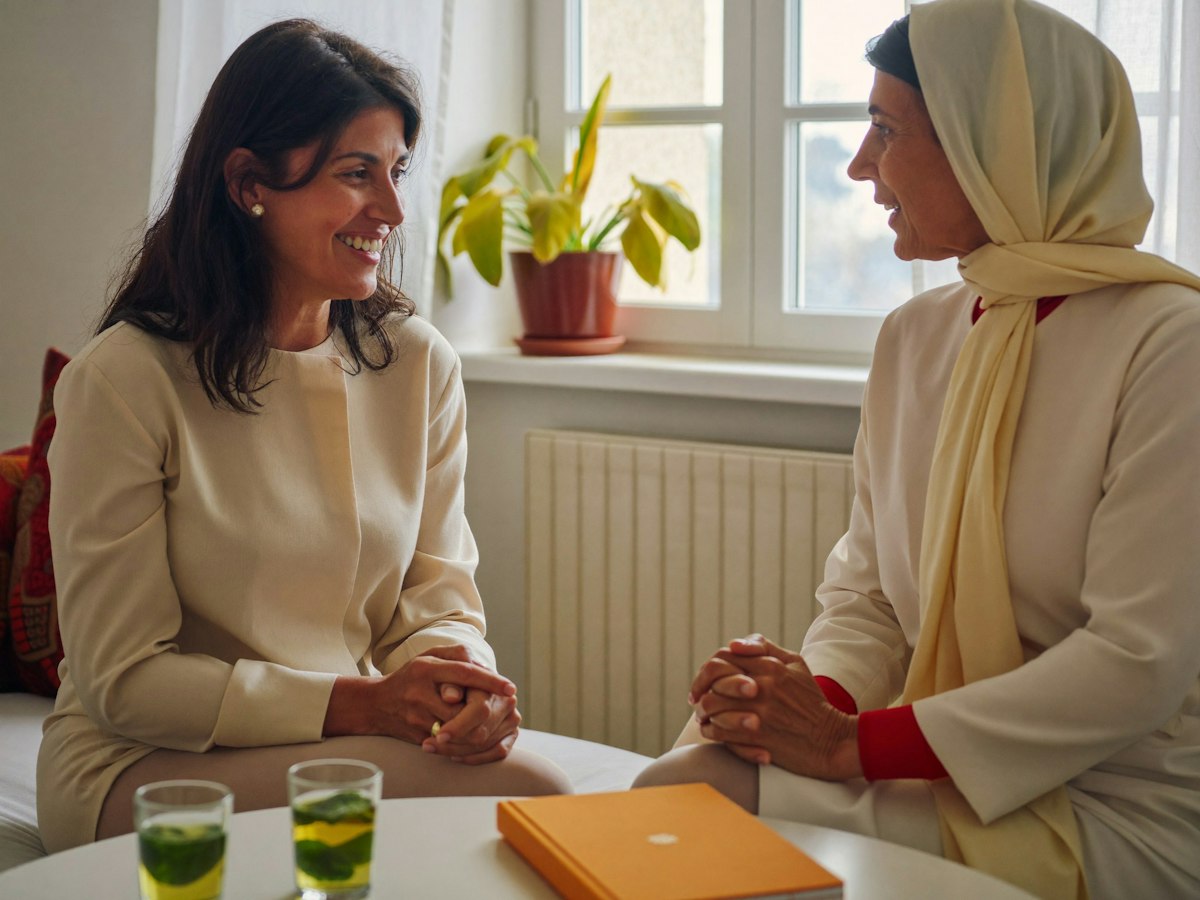
- The participant chooses the language. Each participant is asked at recruitment which language they prefer for the subject. Moderators follow the switches between Darija and French, and stimulus is prepared in both. The analysis notes which language each answer came in, because the switch itself is often informative.
- Casablanca is the start. Casablanca and Rabat are the business centres, and Marrakech, Tangier and Fès buy differently. We agree with you which cities the decision depends on before recruitment starts. Tangier looks north, with its port and its links to Spain, and Marrakech and Agadir live in part from tourism; a brand's distribution map decides which of them joins the study.
- Souq and supermarket. Fresh food and many daily purchases are made in markets and neighbourhood shops, and modern retail serves other occasions. Shop-alongs cover both, with a guide the traders know. Prices in the market are negotiated and prices in the supermarket are printed, so the moderator asks about each purchase in the place where it was made.
- Family decisions, family settings. Home visits are arranged through someone the household knows, and a woman researcher visits when women are at home. Who decides and who buys is asked at recruitment. The time of a visit is set with the family, and the session plan leaves room for the welcome before the first question.
RECRUITMENT
How do you recruit participants in Morocco?
- We recruit through local partners in Casablanca, Rabat, Marrakech and Tangier, by language, income and category use. Screening covers city, district, income band and category use, and each participant is confirmed by phone before the session.
- Participants are asked which language they want to use, and the moderator and materials are matched before the session is confirmed. For rural audiences, recruiters work in person through local contacts, because a phone screener reaches too few people there.
- MindMarket pays every participant's incentive itself. You never handle it.
METHODS
Which methods work in Morocco?
Most studies in Morocco run as in-depth interviews and focus groups, with shop-alongs, ethnographic home visits or taste tests when the question needs them.
| Method | Works well when | Watch out for |
|---|---|---|
| In-depth interviews | Finance, telecoms, health and family decisions, in Darija or French | A French-only guide with participants who think in Darija |
| Focus groups | Concepts, food and communications, women and men apart when the topic calls for it | Casablanca groups read as national |
| Shop-alongs | Souqs, neighbourhood shops and hypermarkets | One channel studied alone |
| Home visits | Cooking, household routines and shared purchases | An introduction through someone the family knows |
| Taste tests | Food and drink adapted to Moroccan taste | Polite scores; compare products side by side |
QUESTIONS
Questions buyers ask about research in Morocco
How much does market research cost in Morocco?
A full-service qualitative study with MindMarket starts at $40,000 for the first market, and Morocco added to a multi-country study starts from $8,000. Each extra city and a second language move the price more than the number of sessions. Every quote is itemised and follows within 48 hours of a first call. Estimate your study.
How do I choose a market research agency in Morocco?
Choose by what the study has to decide. A Moroccan institute fits a national survey; a fieldwork house in Casablanca fits a team that brings its own moderator. A qualitative specialist such as MindMarket fits a brand from outside Morocco that needs local people heard in their own language, by moderators who live there, with one team across every country. Read how to choose a global qualitative research agency.
Should sessions in Morocco run in Arabic or in French?
In the language each participant chooses for the subject: Darija for most everyday topics, French for many professional ones, and often both. We ask at recruitment and match the moderator. Your team follows through translation. Stimulus is prepared in Darija and in French, and brand names stay as they appear on the shelf.
Is Casablanca enough for research in Morocco, or should I add other cities?
Casablanca is enough for a first read. For a national decision, add Marrakech, Tangier or Fès, and remember that a third of Moroccans live outside the cities. We suggest Tangier for the north and Agadir for the south, and rural interviews are done in person.
When should I avoid fieldwork in Morocco?
During Ramadan, when we do not schedule fieldwork, and during the two Eid holidays. August is slow in the cities and busy on the coast, because it is the main holiday month. The dates of Ramadan and of both Eids move earlier by about eleven days each year, so we check them with you before any timeline is fixed.
Can you help us decide, not only run the interviews?
Yes. Beyond the fieldwork, our Customer-Led Strategy work turns what people in Morocco told us into a recommendation: what to do, what not to do, and why. We form the hypotheses, test them with your customers and recommend from their words. If you already work with strategy consultants, we work alongside them.
NEXT