International Focus Groups: Any Market, One Point of Contact

Moderated group discussions in any market worldwide. Recruitment, native moderation, live translated viewing, and one integrated report, all through a single point of contact.
International focus groups are moderated group discussions, typically of six to eight participants, run across multiple countries to understand how different markets respond to a brand, product or concept. MindMarket runs them in 60+ countries with moderators who live in the market: recruitment, native-language moderation, simultaneous translation for live viewing, and one integrated report, all through a single point of contact.
Whether that means three groups in one city or thirty across four continents, you brief one project lead, never a dozen local suppliers. Tell us the decision you’re facing and the markets on your list, and you’ll have a costed proposal within 48 hours.
Rather talk first? Book a call.
What is a focus group?
A focus group (also called a focus group discussion, or FGD) is a structured conversation among six to eight carefully recruited participants, led by a trained moderator, designed to surface how people think, feel and decide about a product, brand or idea.
The format matters. Participants react to each other, not just to your questions: they agree, push back, borrow each other’s words. That group dynamic shows you how opinions actually form, which no survey can capture. It’s efficient, too: as the Nielsen Norman Group notes, one session gathers the perspectives of six to nine people in the time it would take to interview one or two.
Focus groups have been around since the 1940s, when Robert K. Merton formalised the “focused interview”. They’ve outlived every wave of research technology since, because what they capture can’t be automated: real people, working out what they actually think, in front of you. Today they’re a workhorse of an insights industry that passed US$150 billion globally in 2024 (ESOMAR, Global Market Research 2025).
Do focus groups still matter in the AI era?
More than ever, because so much of what brands read now is synthetic. AI can summarise what people have already said online. It can’t put your unreleased concept in front of eight real customers in Jakarta tonight and watch conviction form, or collapse.
A focus group produces primary evidence: new information about your specific decision, from verified real people, on the record. Every dashboard, model and strategy deck depends on that raw material.
Our position is simple: automation belongs in the logistics, never in the listening.
What really happens in a session
A focus group session has three parts: a warm-up that makes honesty possible, a guided middle built around your decision, and a close where the group is comfortable enough to disagree.
A group runs 90 minutes to two hours; research on session length consistently lands on that range as the sweet spot between depth and fatigue.
It opens with warm-up: names, routines, easy ground. The first fifteen minutes decide whether the next ninety are honest.
Then the moderator works through a discussion guide built around your decision. Open exploration first, stimulus and reactions in the middle, trade-offs and forced choices at the end, once the group is comfortable enough to disagree. Behind the glass or behind the stream, your team watches live and passes questions to the moderator between exercises.
By the time the group closes, you haven’t just heard opinions. You’ve watched them form, clash and settle.
What a good moderator looks like
A good focus group moderator manages the loud, draws out the quiet, tells polite agreement from real agreement, and knows when to leave the guide. These are cultural judgement calls, which is why the moderator should live in the market.
Moderation looks like conversation and works like craft. A good moderator manages the loud participant without silencing them, draws out the quiet one without exposing them, and hears the difference between polite agreement and real agreement.
They also know when to abandon the guide, because the group just opened a door the guide never predicted. Those judgement calls are cultural, and they happen in real time. That’s why we insist the moderator lives in the market.
Read how we conducted focus groups in Riyadh and Jakarta:

When focus groups are the right method
Focus groups earn their place when your question is social, comparative or generative:
🎯 Concept and creative screening. Six people reacting to your packaging, advert or product idea will find the strongest route, and kill the weakest, faster than any other method, because they build on each other’s reactions in real time.
🗣️ The language of the category. Groups surface the words real customers use: the phrases that become your copy, your claims and your search keywords. You can’t write in the customer’s voice until you’ve heard it.
⚡ Consensus and conflict. Need to know where a market agrees and where it splits, by age, by segment, by city? Groups show you the fault lines live.
🌍 Cultural decoding. In a new market, a well-moderated group is the fastest honest introduction to how the category works there: who decides, what matters, what would embarrass, what would delight.
🧪 Stimulus-rich sessions. Products to touch, prototypes to try, adverts to watch, flavours to taste. The group room is built for reactions to things.
🤝 Building internal alignment. There’s nothing like watching real customers debate your product from behind the glass (or the viewing link) to get a leadership team on the same page. Groups don’t just generate insight; they generate conviction.
When focus groups are not the answer
The format has real, well-documented limits: dominant voices can crowd out quieter ones, groupthink exists, and personal topics get sanitised in front of strangers. Skilled moderation mitigates a great deal. It doesn’t change what the format is for.
So an honest agency tells you when to use something else. Here’s our list:
Sensitive or personal topics. Money, health, private habits: people perform in groups. In-depth interviews give the privacy that honesty needs, and for natural pairs, dyads and triads go deeper still.
Behaviour over time. Routines, usage and repeat decisions can’t be reconstructed from memory in a two-hour session. Online diary research captures them as they happen.
What people actually do. Stated behaviour and real behaviour diverge, famously. Ethnographic research and shop-along research watch the real thing.
Individual product usability. One user, one screen, one task at a time: that’s UX research, not a group discussion.
“How many?” questions. Sizing, share and validation need quantitative work. Groups generate the hypotheses; the numbers confirm them, and we’ll say so rather than stretch the method.
The full version of this honest answer, critics, data and all:

Focus groups vs the other qualitative methods
No method is better than the others. Each answers a different kind of question:
| Method | Best for | Format | What you get |
|---|---|---|---|
| Focus groups | Concept screening, category language, consensus and conflict | 6–8 participants, 90–120 min | Group dynamics, spontaneous reactions, the market’s vocabulary |
| In-depth interviews | Sensitive topics, expert audiences, decision journeys | 1 participant, 45–90 min | Depth and honesty no group can reach |
| Dyads & triads | Decision pairs: couples, friends, colleagues | 2–3 participants | Real negotiation between people who decide together |
| Online bulletin boards | Multi-market discussion across time zones | Asynchronous, days–weeks | Considered answers, longitudinal probing |
| Ethnographic research | Real behaviour in real context | In-home / in-context observation | The gap between what people say and what they do |
Not sure which fits? That’s a normal place to start. Tell us the decision and we’ll recommend the method, or read our guide: How to Choose the Right Qualitative Methodology.
Online or in-person focus groups?
Both are real focus groups; they trade different strengths. The honest comparison:
| Dimension | In-person | Online |
|---|---|---|
| Group energy | Strongest: body language, spontaneity, the room itself | Good with a skilled moderator; flatter by nature |
| Handling products & stimuli | Touch, taste, try. Unbeatable for physical products | Screen-shareable stimuli only (or pre-shipped samples) |
| Geographic reach | One city per group | A whole country, or several, in one session |
| Hard-to-reach participants | Limited by travel and schedules | Senior professionals and niche audiences join more easily |
| Client observation | Viewing facility, behind the glass | Live stream with simultaneous translation, from anywhere |
| Logistics | Facilities, travel, scheduling | Lighter and faster to field |
Most international programmes now mix the two: in-person depth in two or three priority cities, online groups to extend coverage across the rest of the map. The mix is a design decision, and we’ll argue for the one your question needs, including when the cheaper option does the job just as well.

How to choose your focus group setup
The right focus group setup depends on the decision: the number of markets, whether a physical product is involved, how hard the audience is to reach, and whether you are exploring or validating. Match the setup to your situation:
Launching in one new market → 4–6 in-person groups in two cities (never the capital alone), segmented by your two most important audience splits.
Comparing several markets → the same guide, adapted per market, with native moderators, 2–3 groups per market, so you can tell a pattern from a coincidence.
Testing a physical product → in-person, stimulus in hand. Consider pairing with taste testing or central location testing for structured evaluation.
Reaching professionals or niche audiences → online groups, or in-depth interviews if seniority makes candour in a group unlikely.
Exploring before a bigger programme → two exploratory groups plus follow-up interviews with the most articulate participants. An efficient first look that tells you what to study properly.
How do you run focus groups in multiple countries?
Honestly? This is where international research gets hard. Different recruitment standards, incentive norms, moderation styles and time zones, multiplied by every market you add. Multi-country projects fail in the seams: between agencies, between languages, between methods.
The fix is to run the whole study as one system.
One team, one methodology. One brief, one discussion guide, one analytical framework across every market. When the same team designs and analyses everything, a difference between Tokyo and São Paulo is a finding, not an accident of two agencies working differently.
Recruitment to one standard. Every participant is phone-screened and identity-verified against criteria you approve, whatever the market. Serial study-takers (the industry calls them “professional respondents”) are screened out along with familiar faces; anyone who slips through is replaced, without argument.
Guides adapted, not just translated. A question that works in Berlin can be meaningless, or rude, in Riyadh or Seoul. Local moderators adapt each guide with us: same objectives, same structure, phrasing that belongs to the market.
Native moderation, always. Real conversations happen in the language people think in. Every group is moderated by someone who lives in the market and reads its politeness codes, including the second layer, where “it’s fine” turns out to mean something else entirely.
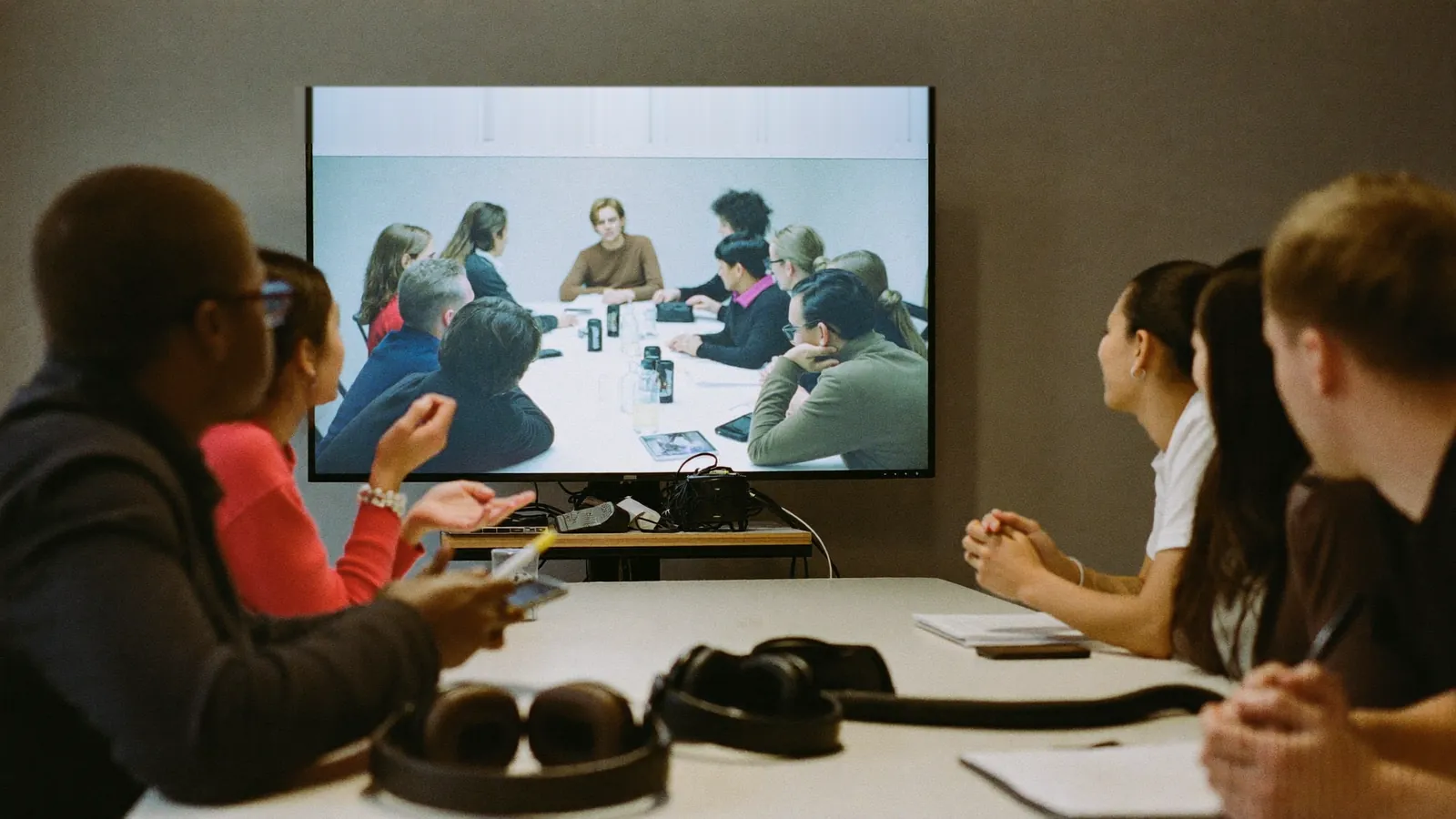
You watch everything, live. Every group is streamed with simultaneous translation. Your team follows the conversation as it happens, from anywhere, and can send the moderator a question between exercises. Can’t make the 3 a.m. group in Seoul? Translated highlights and recordings are waiting before your morning coffee.
Analysis from the original recordings. Meaning lives in how things are said. Our analysts work with native speakers from the original audio, never from translated summaries, where meaning quietly leaks out. The report arrives in English; the analysis happens in the original language.
Facilities and incentives, handled locally. Viewing facilities are booked to one standard where they exist, and built where they don’t. A group in Lagos deserves the same conditions as a group in London. Incentives follow local norms in value and form, because getting them wrong quietly poisons recruitment quality.
Recruitment timing, told straight. General consumers recruit quickly; niche professionals, medical specialists and high-net-worth audiences take longer, market by market. You’ll see the real recruitment picture in the proposal, before you commit rather than after fieldwork slips.
Our participant recruitment guide explains how we find and screen people with relevant experience, and consider who can contribute to the same discussion.
Want the full playbook: pitfalls, cultural nuance, what to do behind the glass? Our step-by-step guide to running focus groups across multiple countries covers everything we’ve learned from 400+ projects.

Your international focus group project, step by step
An international focus group project with MindMarket runs in seven steps, from a costed proposal within 48 hours of your brief to a live readout with a stated point of view:
Brief us. The decision you face, the markets on your list, what you already know. A costed proposal (method, markets, sample, timeline) comes back within 48 hours.
Design together. Markets, cities, segments, group structure and discussion guide, agreed before anything is fielded.
Recruitment. Screeners you approve, phone-screening in every market, verified participants, and over-recruitment as standard, so a no-show never costs you a group.
Guide adaptation. Native moderators localise the guide with us: same objectives everywhere, local phrasing each time.
Fieldwork, watched live. Groups moderated in the local language and streamed with simultaneous translation. You observe; we manage the rooms.
Analysis. One team reads every market from the original recordings and builds the cross-market picture: what’s universal, what’s local, what it means for your decision. Translated transcripts and highlight reels flow to you along the way, so insight starts arriving before the final readout.
Readout, with a point of view. One integrated report, presented live, ending with what we would do in your position, plus a debrief call to dig into the implications. And when the decision needs evidence again in six months, we’re still in the room.
What you get
An international focus group project from MindMarket delivers five things as standard: a costed proposal within 48 hours, live access to every group with simultaneous translation, translated transcripts and highlight reels, one integrated cross-market report, and a live readout with a debrief call.
A costed proposal within 48 hours of your brief: method, markets, sample, timeline.
Live access to every group: streamed sessions with simultaneous translation, from anywhere your team happens to be.
Translated transcripts and highlight reels, delivered as fieldwork progresses, not held back for the final report.
One integrated cross-market report with a stated point of view: what we found, what’s universal, what’s local, and what we would do in your position.
A live readout and debrief call to work through the implications with your team.
Want to know what this would look like for your markets? Tell us the decision and the countries on your list, and you’ll have a costed proposal within 48 hours. The ranges behind that proposal are public: a multi-market focus group programme is typically a Deep Listen study, and when the groups are there to settle a strategic decision rather than answer one question, they run inside our customer-led strategy work.
Focus groups around the world: what changes by region
Europe and North America have the deepest facility infrastructure (purpose-built viewing rooms in every major city) and participants used to the format. The risk here is the opposite one: serial participants who know the format too well. Screening discipline matters more than logistics.
The Middle East rewards preparation. Gender-split groups are standard in Saudi Arabia, hospitality codes shape how sessions open, and the majlis tradition makes group conversation culturally natural once trust is set. Ramadan reshapes fieldwork calendars entirely. Our Middle East consumer guide covers the terrain in depth.
East and Southeast Asia demand moderators who can open the second layer beneath courtesy. In Japan, Thailand or Korea, first answers are polite answers, and an inexperienced team mistakes them for findings. Second cities matter as much as capitals: Osaka is not Tokyo, Surabaya is not Jakarta. Our East Asia consumer guide goes deeper.
Latin America gives groups their best raw material: sociable, expressive participants who enjoy the format. It also demands recruitment that reaches beyond the affluent neighbourhoods panels over-sample, and moderation that reads class codes as fluently as language.
The design consequence? Never copy-paste a fieldwork plan across regions. Same objectives everywhere, local execution each time. That’s what a network of researchers who live in their markets is for.
What international focus groups reveal, sector by sector
Focus groups are used across every sector MindMarket serves, from FMCG and beauty to technology, financial services and automotive. What changes by sector is the stimulus in the room and the decision the group is asked to explain:
🛒 FMCG groups decode routines and shelf logic: why a product enters the basket, earns repurchase, or quietly disappears from the list. They pair naturally with shop-along research in the same week.
💄 Beauty & cosmetics groups read claims the way shoppers do, in seconds and with scepticism, and unpack the routines that decide whether a product earns permanent space in the bathroom.
🍽️ Food & beverage groups pair with taste testing: the tasting gives you structured evaluation, the discussion tells you why, and what the product would have to promise to be chosen twice.
💻 Technology groups probe what product data can’t: why users churn, how buying committees actually decide, what a feature means to someone who will never read the spec sheet.
🏦 Financial services groups unpack trust: why customers switch banks, what advice feels credible, how money decisions get made at the kitchen table. Consulting firms use them to pressure-test strategies across continents.
🚗 Automotive clinics put the concept in front of the people who will drive it: styling reactions, feature trade-offs, and the emotional arithmetic behind a purchase people justify rationally.
🪙 Crypto and Web3 groups surface the fears and shortcuts first-time users do not admit in a survey: wallet set-up, fees, trust in an exchange, the moment they give up.
🏨 Hospitality groups bring guests and diners together to replay a stay or a meal: what they noticed, what they forgave, what they told friends afterwards.
💊 Pharmaceutical and medical devices groups work best with patients and caregivers on daily life with a condition; physicians and specialists we interview one to one.
🏟️ Sports groups put fans in one room to argue about loyalty, prices, broadcast and merchandise, which shows where the passion is and where it stops.
How focus groups feed the rest of a programme
Groups are rarely the whole answer. They’re often the best first move.
A concept that survives the group room goes to central location testing for structured evaluation. The most articulate participants become candidates for follow-up in-depth interviews. Questions about real behaviour graduate to online diary research or ethnographic research. And the language the groups surfaced becomes the questionnaire wording when quantitative validation follows.
Designed this way, each method answers the question the previous one raised. That’s what turns a pile of studies into a research programme.
The mistakes that sink international focus groups
The six most common reasons an international focus group study fails are translated guides, capital-only samples, English-language moderation, courtesy read as approval, one group per market, and analysis from translated summaries. We inherit rescues often enough to know them by heart:
Guides translated instead of adapted.
Samples drawn from the capital only, as if Jakarta were Indonesia.
Moderation in English that flattens every answer into politeness.
Courtesy read as approval, in cultures where disagreement is impolite.
One group per market treated as “coverage”, when it can’t separate signal from coincidence.
Analysis run from translated summaries, where the meaning quietly leaks out.
None of these is expensive to avoid. All of them are expensive to commit.
Why run international focus groups with MindMarket?
Because we do the listening ourselves. Fieldwork in 60+ countries with researchers who live there, 400+ projects delivered for 50+ global clients, and on every study: named moderators (who they are, where they live, what they moderated last month), phone-screened and verified participants, one dedicated project manager, live viewing with simultaneous translation, and one integrated report with a stated point of view. One contract, however many markets.
The same recruitment discipline runs through everything we field. It’s the standard behind our UX research on Apple’s Mac purchase journey. And MindMarket is an ESOMAR corporate member: every study follows international codes for ethics, consent and data protection. And if something can’t be done right in your timeline, we’ll tell you, and propose a better way.
Comparing agencies? Ask one question: who will moderate your groups, in which city do they live, and what did they moderate last month? An agency that runs its own fieldwork answers in one email.
An agency that brokers your study to suppliers you’ll never meet can’t, and every handover between you and the room costs quality control and adds a margin. We built MindMarket to make that question easy to answer.
Frequently asked questions about focus groups
How many participants should a focus group have?
Six to eight is the standard: enough energy to spark discussion, few enough that everyone speaks. Mini-groups of four or five suit complex topics; for decision pairs, dyads and triads go deeper than a full group.
How many groups do I need per market?
Two to three per key segment per market is the honest minimum, because one group can’t tell a pattern from a coincidence. A two-segment, three-market study therefore usually means 12–18 groups; we’ll show you the trade-offs before you commit.
Can I watch focus groups in another country live?
Yes. Every group is streamed with simultaneous translation, whether it runs in a viewing facility, online, or in a market without research facilities, where we build an equivalent setup to the same standard. Your team follows in real time and passes questions to the moderator between exercises.
What language are international focus groups conducted in?
Always the local language, with a native moderator who lives in the market. Analysis works from the original recordings; the report is in English. Moderating in English across non-English markets produces polite, flattened answers, so we don’t do it.
How long does an international focus group study take?
From brief to first group typically takes 2–4 weeks, depending on markets and audience. Multi-market programmes are sequenced so fieldwork overlaps rather than queues. Your proposal, with a real timeline for your markets rather than an optimistic one, arrives within 48 hours of the brief.
What do international focus groups cost?
It depends on markets, number of groups and audience; recruitment difficulty is the biggest variable. Participant incentives (standard practice, healthy for quality) follow local norms and are itemised transparently. Tell us the decision and the markets, and you’ll have an honest, itemised quote within 48 hours.
How do you keep professional respondents out?
“Professional respondents” is the industry’s name for serial study-takers. We just call them a recruitment problem. Phone-screening for every participant, identity verification before fieldwork, exclusion rules for recent research participation, and databases that flag repeat faces. When someone slips through anyway, we replace them, without argument and without a change order.
The short version
International focus groups work when one team runs them to one standard: native moderators who live in the market, phone-screened and verified participants, guides adapted rather than translated, live viewing with simultaneous translation, and analysis built from the original recordings. That’s how MindMarket runs them in 60+ countries: 400+ projects delivered for 50+ global clients, quotes within 48 hours.
Planning group research? Tell us the decision you’re trying to make and the markets on your list. We’ll tell you honestly whether focus groups can answer it, and what it would take.
What would this cost? Estimate it in 30 seconds.
Rather talk first? Book a call.
