


Next method
Ethnographic Research: Discover What Your Customers Really Do (Not Just What They Say)

One-to-one conversations that show why customers decide, not just what they do. Recruitment, native moderation and translation in 60+ countries, through one point of contact.
In-depth interviews (IDIs) are one-to-one qualitative conversations, typically 45 to 90 minutes, between a trained moderator and a carefully recruited participant, designed to understand why customers decide the way they do. MindMarket recruits, moderates and translates IDIs in 60+ countries, in the participant’s own language, through one point of contact.
Six interviews in one country or sixty across sixteen: you brief one project lead and you get one team, one method and one integrated report. Tell us the decision you’re facing and the people you need to hear from, and you’ll have a costed proposal within 48 hours.
An in-depth interview is a structured, private conversation built around your research question, led by a moderator trained to probe rather than to survey. There is no questionnaire read aloud. There is a discussion guide, a skilled listener, and the space for a real person to explain a decision in their own words, including the parts they would never volunteer in front of strangers.
The privacy is the point. One-to-one, people stop performing.
Four things make an interview work: a guide built around one decision, a moderator who follows the participant rather than the script, a participant recruited for who they are, not who they claim to be, and enough time (at least 45 minutes) for reasons to surface behind the answers.
The method also has unusually solid evidence behind it. In one of the most cited findings in market research, Griffin and Hauser at MIT showed that around 20 well-run interviews identify over 90 per cent of customer needs in a category (The Voice of the Customer, Marketing Science, 1993). Depth scales surprisingly well: a modest number of real conversations, done properly, maps a market’s needs more completely than most teams expect.
And the difference from a survey? A survey asks everyone the same questions and counts the answers. An interview follows one person’s reasoning wherever it leads. Surveys measure what you already knew to ask about; interviews find what you didn’t know to ask.
One-to-one interviews produce more candid answers than group formats because there is no audience to perform for: the participant answers to one listener, in private, and the social calibration that shapes every focus group disappears.
Put eight people in a room and each one calibrates against the other seven. That is precisely what makes focus groups valuable for social questions. Remove the audience and something else appears: the real account.
Money decisions admitted with a wince. Health routines described without bravado. The office politics behind a B2B purchase. The brand chosen for reasons the buyer knows are irrational. An interview is the only qualitative format where the participant’s whole attention, and the moderator’s, belongs to one story.
An in-depth interview has three movements: a warm-up that builds rapport, a guided middle that follows the participant’s reasoning, and a focused close that tests trade-offs and asks the study’s central question.
A typical IDI runs 45 to 90 minutes. It opens softly: context, routines, the participant’s world. Rapport is the instrument everything else plays through.
The middle is guided, not scripted. The moderator follows the guide’s objectives while chasing whatever the participant just revealed, climbing from what they did to why it mattered.
The close is where the craft shows: trade-offs, contradictions gently revisited, the one question the whole study exists for. Done well, the participant does most of the talking, and leaves feeling heard rather than processed.
The four core techniques of in-depth interviewing are laddering, projective techniques, artefacts and silence. Together they separate an interview from a questionnaire performed aloud.
Laddering. The moderator keeps asking why a feature matters until the answer reaches a value. A ready meal that is “quick” matters because it means “I’m home before the kids”, and that is what the category is for: time with family, not convenience.
Projective techniques. They give the unsayable a costume. Asked to describe a bank as a person, a participant who would never say “I don’t trust them” will happily describe someone who smiles a lot and never returns calls, and the feeling is on the table.
Artefacts. The fridge shelf, the email thread, the receipt. People misremember what they did, but not what they kept, so the moderator asks to see the object and builds the conversation around it rather than around memory.
Silence. The hardest tool to hold. After an answer, most people fill the pause with the thing they were not going to say; the moderator who can wait three seconds past comfortable hears it, and the one who jumps in never will.
These are craft skills. That is why who conducts your interviews matters more than any other design decision.

More than ever. AI can summarise a thousand reviews in a second; it cannot sit with one customer for an hour and notice the pause before “it’s fine”. An interview produces primary evidence: a real person, verified, explaining a real decision, on the record, in their own words.
We use AI where it helps, in transcription, translation drafts and first-pass coding. The listening stays human, because the moment that changes a strategy is usually the one the transcript alone would have missed.
Interviews earn their place when the question is private, complex or personal:
🔒 Sensitive and personal territory. Finances, health, family decisions, private habits. Subjects where a group produces a performance and an interview produces the real account.
🎓 Experts and senior professionals. Physicians, CIOs, engineers, executives: people who won’t share a room with peers, can’t be scheduled together, and open up one-to-one in ways no panel captures.
🧭 Decision journeys. How a customer moved from first trigger to final purchase, reconstructed step by step, with the detours, influences and second thoughts that group formats flatten.
🏢 B2B buying processes. Committee dynamics, procurement politics, the gap between the stated criteria and the real ones. You only get this from individuals speaking freely.
🧩 Complex products and categories. When understanding one user properly takes an hour, depth per person beats breadth per session.
🎯 Concept reactions without groupthink. Individual, unfiltered responses to an idea, before the room decides what it thinks.
Read how IDIs improved the online shopping experience across Latin America:
Interviews are the wrong tool more often than agencies admit. Use something else when the question is:
Group energy questions. Consensus, conflict, category language, reactions that build on each other: that is focus groups territory.
Decisions made together. Couples, families and friend groups who decide jointly are better heard together. Dyads and triads capture the negotiation itself.
Behaviour over time. Routines and repeat usage can’t be reconstructed from memory. Online diary research records them as they happen.
Real context. What people do in their kitchens, cars and stores belongs to ethnographic research and shop-along research.
Counting questions. Interviews explain, they don’t size. When you need numbers, we’ll say so rather than stretch the method.
Neither is the better method. They answer different questions, and dyads and triads sit usefully between the two:
| Dimension | In-depth interviews | Focus groups | Dyads & triads |
|---|---|---|---|
| Privacy and candour | Maximum: no audience | Lowest: social calibration | High between people who know each other |
| Depth per person | 45–90 minutes of one story | A few minutes per participant | Deep on a shared decision |
| Social dynamics | None, by design | The whole point | The real-life dynamic, miniaturised |
| Best for | Sensitive topics, experts, journeys | Concepts, language, consensus | Joint decisions, peer influence |
| Typical use | 10–20 per segment | 2–3 groups per market | Complement to either |
The strongest programmes often combine them: groups to surface the territory, interviews to go deep on what the room revealed. Undecided? Tell us the decision and we’ll recommend the method, or read How to Choose the Right Qualitative Methodology.
All three are real interviews. They trade different strengths:
| Dimension | In-person | Video | Phone |
|---|---|---|---|
| Rapport and nuance | Richest: full presence and body language | Good; screens flatten a little | Voice only, surprisingly intimate |
| Reach | One city at a time | Any market, any time zone | Anywhere, including low-bandwidth markets |
| Stimuli and product handling | Full: touch, try, taste | On-screen stimuli; pre-shipped samples | None |
| Senior and niche audiences | Hardest to schedule | The B2B standard | The fallback that rescues busy diaries |
| In-context observation | Possible (in-home, in-office) | Partial: a window into the home | None |
Formats mix within one study: video for the bulk, in-person where context matters, phone where connectivity or seniority demands it. Same guide, same analysis, one report.
Our wearables user research with fitness enthusiasts paired 90-minute online IDIs with multi-brand recruitment to reshape a smartwatch hydration feature.
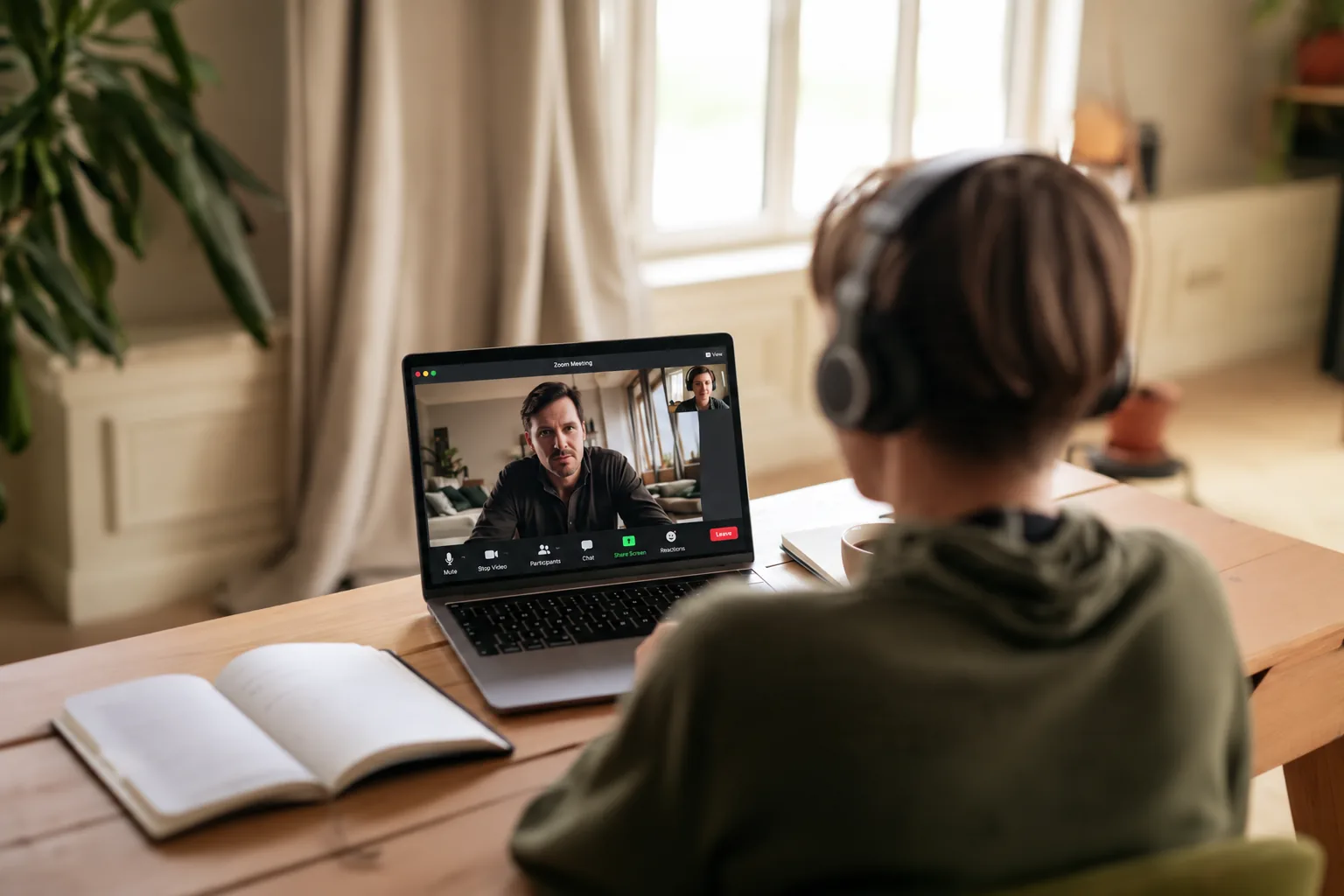
Match the setup to your situation:
Mapping needs in a category → 10–20 interviews per key segment, per Griffin and Hauser’s evidence. Enough to surface over 90 per cent of needs without paying for repetition.
Understanding a decision journey → recent deciders only (last 90 days), 60–90 minutes each, the journey reconstructed step by step with artefacts (emails, screenshots, receipts) where participants are willing.
B2B or expert study → video IDIs, 45–60 minutes, scheduled around working hours, with screeners that verify real decision involvement rather than job titles alone.
Sensitive-topic study → moderator matched for language and, where it matters, gender and age; a longer warm-up; in-person or phone depending on what the topic needs.
Exploring before a bigger programme → 8–12 interviews across two markets to find the fault lines, then design the full study around what they reveal.
International interviewing has a specific failure mode: six markets, six interviewing styles, six sets of transcripts that don’t compare. The way to avoid it is to run the whole study as one system.
One team, one method. One discussion guide, adapted per market with the local moderator: same objectives everywhere, phrasing that belongs to each market. One analytical framework reads every interview, so when Tokyo and São Paulo differ, you are looking at the market, not at two suppliers who worked differently.
Moderators who live in the market. Language is the entry ticket; culture is the skill. A moderator who lives in the market hears what a phrase means, not just what it says, and knows when silence is discomfort, when it is reflection, and when it is disagreement being polite.
Recruitment to one standard. Every participant is phone-screened and identity-verified against criteria you approve. For expert and B2B interviews, screening verifies actual decision involvement: the title on LinkedIn is where verification starts, not where it ends. Serial study-takers (the industry calls them “professional respondents”) are screened out; anyone who slips through is replaced, without argument.
You can listen in, live. Interviews stream with simultaneous translation where you want them observed. Your team hears the conversation as it happens and can pass a follow-up question mid-session.
Analysis in the participant’s language. Native speakers code every interview from the original audio. In a one-to-one format, tone carries half the meaning, and a translated summary keeps the words while losing the tone. You read the report in English; the thinking happened in the language the participant thinks in.
Incentives that fit the audience. A consumer, a nurse and a fund manager are not motivated by the same envelope. Incentives follow local norms and audience seniority, are handled compliantly in regulated categories, and are itemised in your quote.
Consent and compliance, built in. Participants consent to recording and observation before fieldwork, personal data is handled to GDPR standard, and regulated categories follow their own rules: pharmaceutical interviews, for instance, run with adverse-event reporting procedures in place. Unglamorous, essential, included.
The hardest interviews to run are the easiest to get wrong at the recruitment stage. A CIO, a consultant surgeon or a procurement director will give you forty-five honest minutes once, if the approach respects their time and their expertise.
Screeners that verify, not just ask. Role, tenure, budget authority, the last decision of this kind they took part in. A job title is a claim; the screener is where we check it.
Sourcing that fits the audience. Professional networks, referrals within the category, our own databases in 60+ countries, and direct outreach in the participant’s language. Panels are the last resort, not the first.
Scheduling built around their week. Early mornings in Frankfurt, late afternoons in São Paulo, the gap between two operating lists. Interviews land where the diary allows, and backups are booked so a cancellation never costs you a slot.
Incentives that match seniority, paid compliantly and without awkwardness, following the rules of regulated categories where they apply.
Our institutional investor study across seven markets ran on exactly this kind of recruitment: CIOs and senior allocators who do not answer panels, interviewed one-to-one, under one guide. Recruitment is the reason most agencies subcontract expert interviews. It is the reason we don’t.
Explore how we recruit people for individual interviews, from everyday experiences to specialist professional responsibilities, in our participant recruitment guide.
Read how we interviewed CIOs and senior institutional investors across 7 markets here:
A discussion guide is not a questionnaire. It is a route map with permission to leave the road.
Ours are built as a funnel. Context first: the participant’s world, in their words. Then the open middle, the territory explored without leading. Then the focused close: trade-offs, contradictions revisited, the study’s central question asked plainly, once trust has earned the right to ask it. Journey studies add a timeline technique, the decision reconstructed event by event and anchored to artefacts.
Every guide is built with you around the decision the study serves, then adapted per market by the moderator who will use it. The test of a good guide is that the best moment of the interview is usually not in it.
Brief us. The decision, the markets, the audience. A costed proposal (method, sample, timeline) comes back within 48 hours.
Design together. Segments, interview length, format mix and discussion guide, agreed before fieldwork.
Recruitment. Screeners you approve, phone-screening in every market, verified participants, and backups scheduled so a no-show never costs you a slot.
Guide adaptation. Each market’s moderator localises the guide with us: objectives fixed, phrasing local.
Fieldwork. Interviews in the participant’s language, recorded, streamed with translation where you observe. We manage scheduling across time zones.
Analysis. One team codes every interview from the original recordings and builds the cross-market picture: universal needs, local differences, and what they mean for your decision.
Readout, with a point of view. One integrated report, presented live, closing with what we would do in your position. And we stay available when the decision meets reality.
An in-depth interview study from MindMarket delivers four things: session recordings, original-language transcripts with translated verbatims, one integrated cross-market report with a point of view, and a highlight reel on request.
Every interview study delivers the full evidence chain, so you can see how the findings were built, not just what they are:
Recordings of every session, audio or video, with participant consent.
Transcripts in the original language, plus translated verbatims for the quotes that matter.
Behind the report, every theme is coded against the objectives, so the reasoning can be traced back to the interviews if you ask.
One integrated report: the cross-market picture, the segment differences, the participants’ own words doing the arguing, and a stated point of view on your decision.
A highlight reel on request. Your stakeholders hear customers say it themselves. The most persuasive slide is a real voice.
Want to know what this would look like for your decision? Tell us who you need to hear from and you’ll have a costed proposal within 48 hours. If the question is what it costs, a focused interview study starts with First Listen, priced openly on our pricing page.
In-depth interviews are used across every sector MindMarket serves, from technology and pharmaceuticals to financial services, beauty, automotive and FMCG. What changes by industry is who you interview and what the private account reveals:
💻 Technology IDIs unpack B2B buying committees, churn decisions and what a product does in a user’s working day.
💊 Pharmaceutical & medical devices IDIs are the format of record: physicians on real prescribing logic, patients on what happens between appointments, payers on what evidence moves them. Recruited and run compliantly.
🏦 Financial services IDIs reach what no group will touch: real household finances, switching decisions, what trust is built from and how it breaks.
💄 Beauty & cosmetics IDIs decode routines product by product, shelf by bathroom shelf: the private reality behind public claims.
🚗 Automotive IDIs reconstruct the purchase journey, months of research, family negotiation and dealer visits, that no showroom intercept can capture.
🛒 FMCG IDIs explain the basket: why a product earned its place, what it replaced, and the private economics of the weekly shop.
📊 Consulting firms use our IDIs to pressure-test client strategies with the decision-makers who will live with them, across markets, under one guide.
🏨 Hospitality IDIs follow one guest through a booking, a stay and the review they wrote, and show where loyalty was won or lost.
🏟️ Sports IDIs reach the fan behind the season ticket or the subscription: what they pay for, what they would drop first and why.
The format is universal; the craft is local.
In the Middle East, moderator gender matching matters in several markets, and trust-building takes the time it takes. Our Middle East consumer guide covers the codes.
Across East and Southeast Asia, indirectness is information. A skilled moderator reads what is conveyed rather than stated, and never forces a “no” that costs face. Our East Asia consumer guide goes deeper.
In Latin America, rapport comes fast and warmth is the medium. The skill is steering an expansive conversation without deflating it.
In markets where people are used to research, the risk is polish: rehearsed answers from participants who know the format. The moderator’s job is to get behind them.
Same method, four different crafts. That is why our moderators live where they work.
IDIs pair naturally with everything else we do. They follow focus groups to go deep on what the room surfaced. They precede quantitative work by supplying the customer’s own words for questionnaire wording. They extend online diary research with debrief conversations that turn a week of entries into understanding.
And in B2B programmes they are often the whole backbone: a market mapped one decision-maker at a time, in fewer conversations than most teams expect. See how they fit with all our research services. They are also how we work out where your next phase of growth should come from, by asking the people who would have to fund it: one of the ten decisions our customer-led strategy work is built around.
The six most common reasons an interview study fails are a recited guide, recruitment by job title, interviewing in a second language, slots that are too short, over-recruiting the articulate, and analysis from translated summaries. Most of them are decided before the first interview starts.
Reading the guide instead of the participant. A questionnaire performed aloud is not an interview.
Recruiting titles instead of decision-makers, and discovering in minute ten that the “buyer” has never bought anything.
Interviewing in English because it is convenient, and losing the half of the meaning that lives in the mother tongue.
Booking 45-minute slots for 90-minute questions.
Over-recruiting the articulate. The participants easiest to schedule are the least representative.
Analysing from translated summaries, where nuance goes to die.
Every one of these is cheaper to prevent than to discover in the readout.
Because the moderator is the instrument, and ours live in the market. Fieldwork in 60+ countries, 400+ projects delivered for 50+ global clients, and on every study: named moderators, phone-screened and verified participants, guides adapted with the people who will use them, live listening with translation, analysis from original recordings, one project manager and one integrated report with a stated point of view.
One question tells you what kind of agency you are talking to: who, personally, will sit across from your participants, and where do they live? We answer with names and cities. If the answer you get elsewhere is “our trusted local partners”, the interviews will be done by people that agency has never met either, and every intermediary between you and the conversation costs quality and adds margin.
Forty-five to ninety minutes. Under forty-five you get answers but not reasons; past ninety, fatigue sets in on both sides. B2B interviews cluster at 45–60 minutes out of respect for diaries; consumer journey interviews earn their 90.
The research is unusually clear: around 20 interviews identify over 90 per cent of customer needs in a category (Griffin & Hauser, MIT, 1993), and 10–20 per segment when segments differ meaningfully. More than that buys repetition, not insight. We’ll show you the sampling logic in the proposal.
The question decides it. In-person when you need context or people handling a product; video for reach, B2B scheduling and speed across markets; phone when bandwidth or diaries make video impossible. Most international studies mix the three under one discussion guide, and we recommend the mix in the proposal.
The participant’s own, always, with a moderator who lives in the market. Analysis works from the original recordings with native speakers; the report is in English. An interview in the participant’s second language is only a summary of what they would have said.
Yes, it is one of our specialities. Screeners verify real decision involvement rather than job titles, incentives match seniority, and scheduling adapts to working weeks across time zones. Hard-to-reach is a recruitment problem, and recruitment is our home ground.
A structured interview asks every participant the same questions in the same order, which makes answers easy to compare but shallow. An unstructured interview has no fixed questions at all. In-depth interviews sit in between, semi-structured: a discussion guide fixes the objectives, and the moderator is free to follow each participant’s reasoning to reach them.
From the original recordings, by native speakers, never from a translated transcript alone. Each interview is coded against the objectives in the discussion guide, then the analysis moves across interviews to find the patterns and the outliers, with verbatim quotes in the participant's own language kept beside the English translation. The report gives a stated point of view on the decision, not a summary of what people said.
A focused interview study starts with First Listen, and an itemised quote with a real timeline comes back within 48 hours. Three things move the number: the markets (each adds recruitment and a native moderator), the audience (consumers recruit in days, senior specialists take longer and carry higher incentives) and the interview count, where around 20 per segment is usually the ceiling worth paying for. Timing follows the audience rather than the market count, because markets run in parallel. Real ranges from delivered projects are on our pricing page.
In-depth interviews work when the moderator probes instead of reciting, the participant speaks their own language, recruitment verifies people rather than titles, and analysis starts from the original recordings. Around 20 well-run interviews surface over 90 per cent of a category’s customer needs. That is how MindMarket runs IDIs in 60+ countries: 400+ projects delivered for 50+ global clients, quotes within 48 hours.
Planning interview research? Tell us the decision you’re trying to make and the people you need to hear from. We’ll tell you honestly whether IDIs can answer it, and what it would take.
What would this cost? Estimate it in 30 seconds.
