Consumer Research in Latin America: A Practical Guide

Consumer research in Latin America explores how people choose, pay for and use products in the markets you plan to serve, so your team can see what will travel across the region and what needs to change in each country. The most useful studies follow the whole experience, from the first reaction to the moment the product is opened at home, because that is where regional plans tend to succeed or stall.
Picture a new household product that tests well in Mexico City. People like the idea, the pack and the price. Then the same product meets a neighbourhood shop in Bogotá, a Pix checkout in São Paulo and a shopper in Buenos Aires comparing it with last month’s receipt.
Same product. Four different stories.
MindMarket loves researching Latin America for exactly that reason. In this guide we share what changes between six markets, what our own work in the region has taught us, and how to turn what people tell you into decisions your team can defend.
MindMarket works across 60+ countries · 400+ projects delivered · 50+ global clients. Our research services run from study design and participant recruitment to local moderation, analysis and strategic recommendations, with researchers and moderators who live in the market and one project manager who stays with your study from start to finish.
What should a Latin America study help you decide?
A Latin America study should help you decide what to keep the same across markets and what to change in each one. A product can meet the same need everywhere and still ask people to buy, pay for or use it in different ways.
Differences like these rarely show up in the first reaction. People can love an idea in a discussion and still leave it on the shelf.
Follow the purchase beyond the first reaction. Imagine someone who likes a new detergent, then hesitates in front of the pack. Is the problem the money today? Carrying it home? Finding space for it? Whether the household will finish it?
Four explanations, and each one points to a different response from the brand. A discount does little for a storage problem. A smaller pack can change both the amount paid today and the cost per wash. A good study makes room to find out which story is true.
Choose markets for the comparison they offer. This guide covers Brazil, Mexico, Colombia, Argentina, Chile and Peru. Together they show different sides of buying, paying, language and everyday use, and none of them is a recommended launch sequence.
If your offer already sells in one market, compare it with the places you plan to enter next. For a new category, start with what people use today. A country earns its place in the study when what you learn there could change a decision your team is ready to make.
🟢 How MindMarket starts. Our first conversation is about the decision in front of you: what is on the table, what would change your mind, and what you would need to hear to go the other way. Markets and methods come after that.
What has our work in Latin America taught us?
One lesson stands out from our work in the region: people’s everyday arrangements explain more than their stated preferences. The accounts, cards, shops and routines people already juggle decide whether a new offer fits into their lives.
One study showed it plainly. A major US retailer, working with a US-based UX agency, asked us to explore how shoppers in Mexico and Chile think about their digital identity when they shop across countries. The retailer was planning to bring its regional accounts together into one.
Our recruiters found people who lived both sides of the question: shoppers juggling several regional accounts for the same brands, and shoppers already using a single global account. Bilingual local moderators ran 20 remote sessions of 60 minutes, 10 in each market, while simultaneous interpretation let the US team follow every Spanish-language conversation live.
“I have three different accounts for the same shop. I never remember which email I used for which country, and my Brazilian card doesn’t work on the Chilean site.” (Participant, Chile)
The study confirmed the retailer’s plan, and showed that the frustration was bigger than the team had understood. The full cross-border UX research case study tells the rest of the story.
What we see across the region. Latin America gives group research some of its best raw material: sociable, expressive participants who enjoy the conversation. It also asks for recruitment that reaches beyond the affluent neighbourhoods that online panels tend to over-sample, and moderation that reads class codes as fluently as language.
MindMarket plans for both from the first brief. The liveliest conversation only helps you if it comes from the people your plan depends on.
What changes between Brazil, Mexico, Colombia, Argentina, Chile and Peru?
The country differences that matter most are the ones that change a research choice: who takes part, what you show them, where you watch a purchase happen and how you read an answer. The table and the six country notes below connect local evidence with those choices.
Treat them as starting points for a brief. Your category and your customers decide which ones matter.
Six markets, six first questions
| Market | What we would explore first | What the study needs to capture |
|---|---|---|
| Brazil | How does the way people pay change the offer? | Payment options, including Pix, and when the money leaves the account |
| Mexico | Does the size of the purchase change how people pay? | Recent purchases at different amounts, in the places you plan to sell |
| Colombia | What happens at the neighbourhood shop? | What is on the shelf, the purchase occasion and how people pay there |
| Argentina | What are people comparing when they judge a price? | Dated prices, pack sizes, promotions and payment terms |
| Chile | What happens between checkout and first use? | Stock, delivery promises, what arrives and the experience afterwards |
| Peru | Can everyone you need to hear from speak comfortably? | Language preferences, and people beyond the easiest places to recruit |
🇧🇷 Brazil: how does the way people pay change the offer?
In Brazil, show people how they would pay as well as what they would buy. In the 2024 consumer survey covered by Banco Central’s 2025 Financial Citizenship Report, 46.1% of participants named Pix, Brazil’s instant-payment system, as the payment method they used most often.
The survey covered capitals and selected cities above 100,000 inhabitants, with southern coverage limited to Santa Catarina and Paraná. Worth remembering before you generalise to the whole country.
Picture two shoppers looking at the same appliance in São Paulo. One pays at once by Pix. The other only considers it because the total is split into instalments. Same price tag, two different offers.
What it means for your study. Ask participants to walk you through a recent purchase: what the seller offered, how they paid and what made it easy or awkward. Show the total price and the amount due today side by side, with real instalment terms where they apply.
Your team needs to know whether a reaction is about the product, the payment today or paying over time before deciding what to adapt.
🇲🇽 Mexico: does the size of the purchase change how people pay?
In Mexico, ask about the purchase amount and the payment method together. According to INEGI’s ENIF 2024, published in 2025, 85.2% of people aged 18 to 70 said cash was the method they used most often for purchases of MXN500 or less.
Place matters too. For purchases above MXN500, the same cash figure was 55.2% in Mexico City and 82.0% in the survey’s South region (Campeche, Chiapas, Guerrero, Oaxaca, Quintana Roo, Tabasco and Yucatán). The figures describe people’s usual method; they do not measure shares of transactions.
A payment idea that works for your Mexico City customers may meet a different reality in Oaxaca. If you plan to sell there, the study needs people there.
What it means for your study. Recruit on recent category purchases, whatever the route and the payment method. Where both occasions matter, compare a small everyday basket with a bigger planned purchase: when was the budget set, what changed on the way, and what was left behind?
Details like these give a pack-size or channel recommendation far more substance than a general question about affordability.
🇨🇴 Colombia: what happens at the neighbourhood shop?
In Colombia, include neighbourhood shops whenever they are part of the route to your customer. DANE’s study of bakery and neighbourhood-shop microbusinesses, published in May 2026, found that 62.3% of them operated from a dwelling in 2024.
The study excludes eight departments, and the figure describes businesses; it does not measure the share of purchases made there. Still, it tells you something useful: the shop may also be somebody’s home.
Imagine a shopper asking for your product over the counter and hearing that it is out of stock. What does she take instead? What does the shopkeeper suggest? That short exchange can shape a choice as much as your advertising does.
What it means for your study. Before a shop visit, check what is open to customers and where permission is needed, especially where business and home share the same space. Then follow the purchase itself: what can the shopper see, what do they have to ask for, and what happens when the item they came for is not there?
Compare those occasions with other channels before deciding that a product needs new packaging or new messaging. A choice shaped by what was available calls for a different fix from a choice shaped by the brand.
🇦🇷 Argentina: what are people comparing when they judge a price?
In Argentina, show price, quantity and payment terms together, because shoppers weigh all three at once. INDEC’s supermarket survey for July 2026, published in September, attributed 41.9% of sales value to credit-card payments across its panel of 93 supermarket companies.
The figure measures supermarket sales value. It does not tell us how many shoppers paid in instalments, and as a monthly figure it deserves a fresh check before you plan fieldwork.
Picture a shopper holding your new pack next to the brand she bought last month. Her question is whether it costs more than what she paid then, in how many payments, and for how much product.
What it means for your study. Prepare realistic materials in pesos, with the pack size, the price date and any real promotion or payment conditions visible, and ask a local researcher to check them before fieldwork. Otherwise people may react to an outdated price while your team believes it is testing the product.
Start with a recent comparable purchase before showing the new offer: what did the person buy, and what did they pay? Keeping today’s alternative in the conversation separates an objection to the price from a lack of reason to switch.
🇨🇱 Chile: what happens between checkout and first use?
In Chile, follow online shopping beyond the checkout, because the experience after payment shapes whether people buy again. In its 10 June 2026 CyberDay update, consumer authority SERNAC reported complaints about orders cancelled for lack of stock, delivery problems and promotions that were not honoured.
SERNAC’s complaints point to moments worth investigating. They do not establish a failure rate for Chilean online orders.
Chile is also where our cross-border study heard about three accounts for one shop. The steps around the product can matter to shoppers as much as the product itself.
What it means for your study. Follow an intended purchase through stock confirmation, payment, the promised delivery, arrival and first use. Include people whose orders were cancelled or changed as well as those who received what they expected. A short online diary followed by a conversation shows where the experience kept its promise and where it broke down.
Keep the product and the buying experience apart in the analysis. Someone who stops ordering after a delivery problem has a different reason from someone who tried the product and disliked it, and each reason calls for a different fix.
🇵🇪 Peru: whose experience will your language plan let you hear?
In Peru, build the language plan around the people you need to hear from. The Ministry of Culture’s language register lists 48 indigenous languages, a useful starting point that we consulted in 2026.
A person’s location or background does not tell you which language they want to use in a research conversation. So ask.
Imagine someone who completes a short screening form in Spanish without difficulty, then struggles to describe a detailed experience in it. A Spanish-only screener would count her in. A Spanish-only interview could lose much of what she has to say.
What it means for your study. Ask about language comfort during recruitment, before a Spanish-language screener decides who gets through, and build the support people need into moderation, materials and analysis from the start.
When the business decision reaches beyond Lima, recruit in the places it concerns. For a product that several household members use, establish who chooses it, who buys it and who uses it, and whose account your study needs.
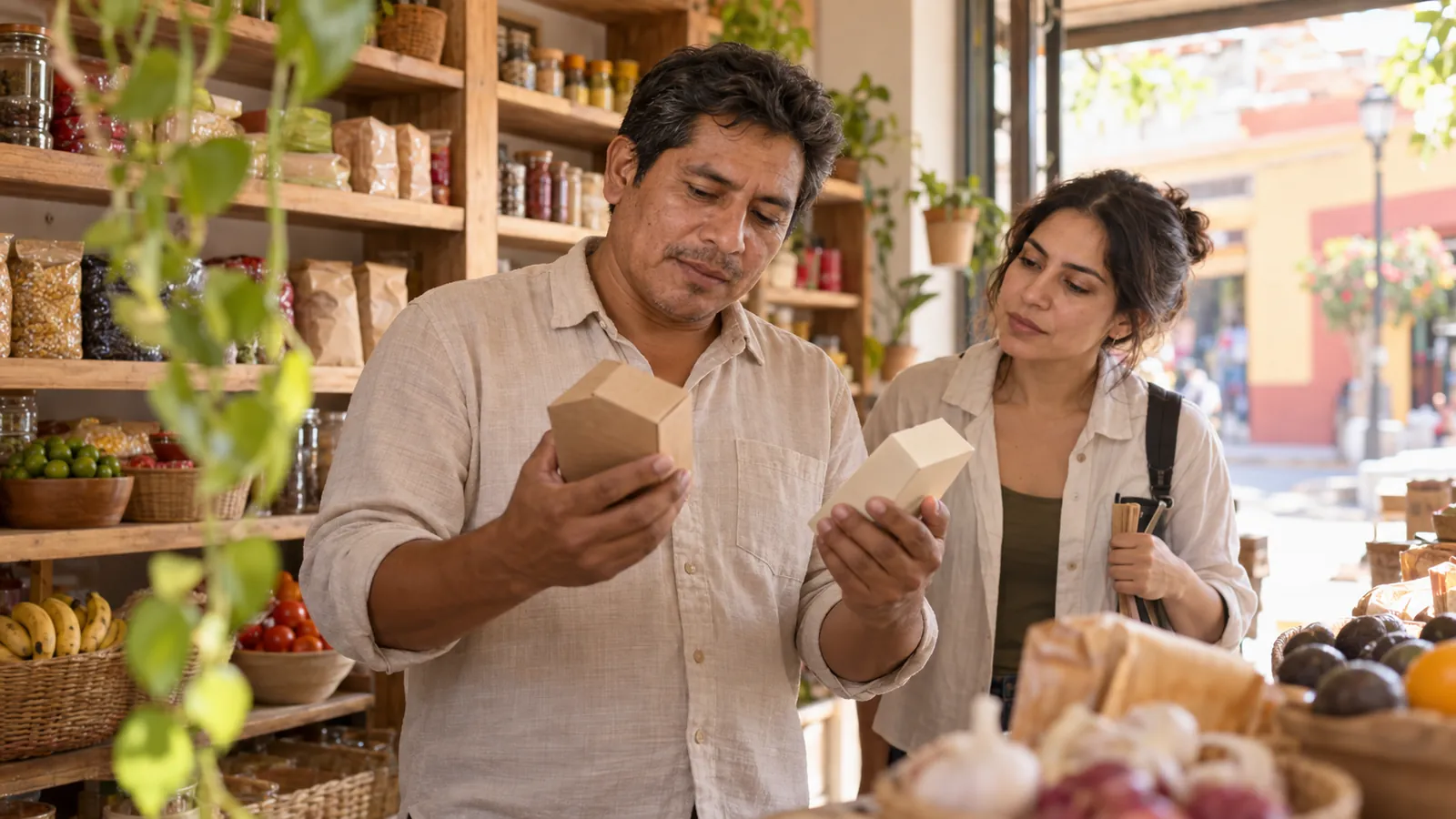
Who needs a place in the research?
Recruit the people whose experience could expose a weakness in your plan, including shoppers who abandoned a purchase as well as those who completed one. In a regional study, agree the relevant behaviour across markets first, so a difference in recruitment does not turn into a false difference between countries.
Recruit around the experience, not the demographic. For a repeat-purchase question, establish what someone bought, where, when and whether they used it again. Include lapsed buyers when the brief is about why people leave, and make room for the person who uses the product when someone else in the household buys it.
A job title or a broad income band will not tell you who chooses the groceries, who pays for the fridge or who asks a relative to finish an online order.
Question the formal-job filter. The ILO’s 2025 regional labour report puts informal employment at an average of 46.7% across 12 countries in the first half of 2025. A screener that requires a formal job, for a purchase that has nothing to do with employment, may leave out a large share of the people you need.
The ILO figure describes employment and says nothing about spending power. Ask directly about the activity you are studying instead.
🟢 How MindMarket recruits. Every participant goes through two steps, against criteria your team approves: an online screener that lets us run IP checks, then a phone call in which we check how the person expresses themselves, explain what the study involves and verify their ID. People who screen out are never passed to you, and we keep recruiting until the sample is full.
MindMarket recommends over-recruiting by 20% when the timeline leaves no room to replace anyone, and every invitation explains the time commitment, recording and incentive before anyone agrees to take part. Our participant recruitment page explains the whole process.
Which methods reveal how people choose and use products?
Choose the method around the part of the experience you need to understand: a conversation explains a decision, a shopping visit puts the real choices in view, and a diary follows what happens between purchases. In a multi-market study, keep the core questions the same and choose activities that participants in each place can complete comfortably.
Methods for buying and using
| What you need to understand | Method to consider | Why it helps |
|---|---|---|
| Why someone chose, rejected or left an offer | In-depth interviews | Time to explore a personal decision and its circumstances |
| How people discuss an idea together | Focus groups | Interaction that reveals language, questions and disagreements |
| What changes across purchase or usage occasions | Online diaries | Entries made close to the moment, with follow-up on the detail |
| How a product fits into the home | Ethnographic research | Observation of storage, use and the people involved |
| What shapes a choice in a shop | Shop-alongs or customer intercepts | The available products and the recent experience stay close at hand |
🗣️ Give private decisions room. In-depth interviews give someone space to talk about household money, a difficult service experience or a choice they would rather not discuss in front of others. Start with a recent occasion and ask what happened next.
Focus groups help explore an idea through discussion. Collect individual reactions first, so you can compare them with the views that form in conversation.
🛒 Stay close to the shelf. Shop-along research lets a moderator explore a choice while the alternatives, prices and pack sizes are in front of the shopper. Customer intercepts offer a shorter conversation right after a visit, such as asking why someone left without the product they came for.
Choose the setting with care. A supermarket visit leaves the neighbourhood shop and the online order out of view, so include those routes when they matter to your distribution decision.
📱 Follow the product home. Online diary research follows use between shopping trips: who opens the pack, how much gets used and what happens when it runs out. Ethnographic research brings observation and conversation together at home, where you can see where the product lives and the workarounds people have found.
Always ask before photographing or recording, and let the person explain what you see.
🧪 Test the task before you commit. Internet access does not mean someone has a private room, spare mobile data or a phone that displays your materials clearly. Try the activity on the device participants will use, including uploading an entry and reading a pack or concept at its real size.
How do you keep meaning intact across Spanish and Portuguese?
Keep meaning intact by asking people about the same underlying experience in words that make sense to them. One shared guide holds the business question steady, and local preparation makes the category terms, products and examples recognisable in each market.
Check what the question means locally. “What makes this good value?” can lead one person to talk about the pack price, another about how long it lasts, and a third about a promotion or saving a second trip to the shop. Ask for the comparison behind the answer, then explore the occasion that brought it to mind.
Translate that explanation with its context. A report that files every positive value comment under one heading hides useful differences between people, including within the same country.
🟢 How MindMarket runs it. Sessions run in the participant’s language, led by native-speaking moderators who live in the market. Local moderators adapt each guide with us, so the objectives stay the same and the phrasing belongs to the market. Your team can follow live with simultaneous interpretation, as the US team did in our Mexico and Chile study.
Our analysts then work from the original recordings with native speakers, never from translated summaries. The moderators who heard the conversations take part in the debrief, so they can challenge a conclusion before it becomes a recommendation. Our research network page shows where they work.

Which approach fits your project?
The right approach depends on where your plan stands: entering a new market, adapting an offer you already sell, running a design your team has already written, or staying close to customers after launch.
🧭 You are considering a new market. Start with how people meet the need today and where a new offer could earn its place. Interviews and home visits build that understanding before you test a finished concept, and any market-sizing work can run alongside if the investment decision needs both.
For a question like this, First Listen answers one precise question in weeks, and Deep Listen is the complete study built around a decision.
🔧 You need to adapt an offer you already sell. Keep the current product and its alternatives in view while you explore what people value and where buying or using it gets difficult. Pick the activity that exposes the issue: handling a pack, following repeat use or talking through an abandoned purchase.
The findings should tell you what to change in each market and what to keep the same across all of them.
📋 You already have a research design. Share your guide, recruitment criteria and materials early, so local researchers can review them. Tell us which parts you need, from recruitment alone to moderation, coordination and analysis, and agree the format and timing of recordings, translations and debriefs.
Research agencies and consultancies also work with MindMarket as a white-label fieldwork partner for multi-country studies under their own brand.
🔁 You need to keep listening. When the market keeps moving after launch, Always Listening is a continuous programme with one dedicated researcher, so your team keeps hearing from customers month after month.
What should you budget and allow time for?
Budget for the people, places, activities and deliverables your decision needs, and allow time for local preparation and for thinking after the fieldwork. In Latin America, recruitment difficulty, language support, travel, product handling and the depth of analysis all move the number.
Our prices are public. A qualitative research project with MindMarket typically costs between $15,000 for fieldwork-only work and $75,000 and up for a complete multi-market programme, according to our research pricing page, built from 400+ delivered projects. Each additional market adds from $8,000, and every quote is itemised and arrives within 48 hours.
Protect the part that answers the question. If the decision concerns smaller-town distribution, removing those towns changes what the study can tell you. If the question is about repeat use, swapping a diary for a single conversation removes the evidence about that experience. Discuss those trade-offs openly when you set the budget.
Plan backwards from the decision date. Give the local team time to review the guide, test the recruitment criteria and check product availability before sessions begin. Across countries, confirm local calendars, public holidays and any travel or product delivery before promising a shared fieldwork window.
Keep time after the sessions for comparison and discussion. The final presentation is far more useful when the research team has worked through the disagreements between markets and your team has had time to consider what they mean.
What happens after you get in touch. Our first call is an introduction: we listen to the need and check whether we are a good fit. We then build and cost the proposal and present it at a second meeting, together with the timetable for the research itself. A question and a decision date are enough to start; you do not need a finished brief.
How should findings become strategic recommendations?
Findings become strategic recommendations when they say what your team should keep, change or test, with the evidence behind each choice and a clear line between regional and local conclusions.
Explain a shared need before recommending a shared response. Similar reactions can have different causes. People in two markets might both question a large pack: in one, the issue is the money due today; in the other, it is space at home.
Count both as a preference for smaller packs and you lose the difference that should guide the next test. The payment concern points to a smaller entry pack at a stated price. The storage concern points to a different shape or a refill.
Make the trade-off visible. A smaller pack might be easier to buy today and more expensive over a month. A useful recommendation says so, instead of presenting the change as an automatic improvement.
Be honest about what the study cannot say. Qualitative research explains experiences and reasons; it does not tell you how common each view is across a country. If the decision needs an estimate of demand, market size or price sensitivity, name the extra evidence required and how it will connect with the qualitative findings.
🟢 How MindMarket reports. Every MindMarket report closes with a stated point of view: what we found, what holds across markets, what is local, and what we would do in your position. When the decision itself is the hard part, our customer-led strategy work produces The Decision Case: the options in front of you, one recommendation in full sentences and the trade-offs of the routes we are not recommending.
A regional plan is a bet on people your team has not met yet. Meet them first.

Frequently asked questions
Can one study cover Spanish- and Portuguese-speaking markets?
Yes, one study can cover both, with a shared research question, locally reviewed materials and coordinated analysis. Budget for the languages participants need and for local researchers’ part in the interpretation. At MindMarket, native-speaking moderators run each market and one team compares them, so the questions keep the same meaning while the wording fits each place.
Do we need to research beyond the largest cities?
Research beyond the largest cities when experiences there could change your decision. A city launch may only need a focused local study; a wider distribution plan needs evidence from the places it will serve. Choose each location for a reason, such as how people shop or use the product, and say clearly where the findings apply.
How does participant recruitment work in Latin America?
Recruitment starts with the behaviour and experience your study needs, then local routes to reach those people and proportionate checks. At MindMarket it runs in four steps: we agree comparable criteria across markets with your team; recruit through local routes that reach beyond the easiest neighbourhoods; screen in two steps, an online screener with IP checks and then a phone call with an ID check; and explain the activity, recording, time and incentive before anyone says yes. Our participant recruitment page explains the process in full.
Is online or in-person research better in Latin America?
Choose online or in-person research according to what you need to learn and what taking part requires. Online sessions suit audiences spread across cities, as in our 20 remote sessions in Mexico and Chile; visits bring the shop, the product or the home into view. Test the activity with intended participants first, including device access and privacy.
What does consumer research in Latin America cost?
Cost reflects the markets, recruitment criteria, methods, languages and deliverables in the scope. A qualitative project with MindMarket typically costs between $15,000 for fieldwork-only work and $75,000 and up for a complete multi-market programme, and each additional market adds from $8,000. Our pricing page gives the full ranges, and after a first conversation about your need, every quote is itemised and arrives within 48 hours.
Which markets should a first study include?
Start with the markets where you plan to act and the comparisons that could change your plan. A market where you already sell can be a useful reference for an expansion study. Brazil and Mexico matter for many briefs, but neither one stands in for the people, channels or conditions your offer will meet elsewhere.
Will the report include strategic recommendations?
Yes, if you want them: MindMarket can take the work through analysis and reporting to strategic recommendations, agreed in the scope. Every report closes with a stated point of view on what to keep, change or test, and separates regional conclusions from local ones, so your team can see the evidence behind each choice.
Ready to plan research in Latin America?
A good research brief starts with something your team needs to understand. Tell us what you are considering, where you plan to act and what would help you decide, and we will work through the options with you.
For other regions, read our Middle East consumer guide and our East Asia consumer guide. Bring your questions, even if the markets or methods are not settled yet.
